


"To close out the year, I’d like to extend warm holiday wishes to all, and safe and secure voyages to our seafarers everywhere."
Director's Log 
Thank you to everyone who has contributed to OCIMF’s work this year. Your time, expertise and steady engagement continue to underpin the forum’s strength. OCIMF remains credible and influential because of the commitment you and your teams bring to our shared purpose.
recognise the dedication of our committee members, secretariat, and staff. Your careful planning, thorough analysis, thoughtful challenges and consistent delivery build trust in our programmes and ensure reliable guidance. Special thanks to our SIRE, OVID and BIRE inspectors. Your professionalism and ongoing commitment are vital to sustaining confidence in our programmes that drive maritime safety.
This year, we made progress in strengthening governance, work prioritisation and delivery oversight. We continued to build a learning culture across the secretariat and the wider forum, deepening collaboration with industry partners.
And, we have been preparing for the future. The technical and geopolitical pressures facing our industry are real and growing. Against this backdrop, OCIMF has focused on where we add the most value and can deliver it efficiently.
To close out the year, I’d like to extend warm holiday wishes to all, and safe and secure voyages to our seafarers everywhere.

Karen Davis
Director OCIMF
Do you have news that you'd like to share with our readers? If so email This email address is being protected from spambots. You need JavaScript enabled to view it.
COP 30 climate conference summary
The UN’s annual climate change conference, the 30th Conference of the Parties (COP 30) to the UN Framework Convention on Climate Change (UNFCCC) was held in Belem, Brazil from 10–22 November.
OCIMF monitored the COP discussions remotely and engages with the COP process through the Clean Energy Marine Hubs (CEM-Hubs) initiative led by the International Chamber of Shipping. The following points may be of interest to readers:
COP 30 outcomes
Strains within multilateralism and broader problems with the COP process meant that progress was challenging. The final session was repeatedly interrupted with points of order and comments on negotiation issues. When it did close, many countries appeared to be unhappy with the lack of clarity in the outcome, as well as the removal of the COP 28 text “to transition away from fossil fuels”. The lack of consensus led the Chair to announce two Presidency roadmaps to report back to COP 31 on a) transitioning away from fossil fuels and b) reversing deforestation.
Next COP hosts
Turkey will host COP 31, with Australia acting as co-president. Ethiopia agreed to host COP 32.
Shipping at COP 30
Aviation and shipping are considered separately from the Nationally Determined Contributions that countries party to the UNFCCC need to submit every five years to meet the Paris Agreement. Emissions from international aviation and maritime transport were discussed by the Subsidiary Body for Scientific and Technical Advice (SBSTA) meeting, which heard updates from the International Civil Aviation Organisation (ICAO) and the IMO. Procedural conclusions acknowledged the discussion and its continuation at the SBSTA’s next meeting in 2026.
Side agreements relevant to maritime
The UNFCCC Outcomes Report highlighted several new localised initiatives and announcements relevant to maritime where success could be replicated elsewhere:
- Sustainable Fuels: the ‘Belem X4’ Pledge to increase sustainable fuels use by at least fourfold by 2035 from 2024 levels. This will be tracked by the International Energy Agency (IEA) and coordinated by the CEM Future Fuels Action Plan that includes the CEM-Hubs (where OCIMF is a partner). Some 23 countries are supporting, alongside bodies such as Maersk, Toyota and the Hydrogen Council.
- Green Shipping Corridors: announcements of 1) Los Angeles–Long Beach–Shanghai Green Shipping Corridor encouraging port electrification and bunkering green methanol and 2) the Port of Açu (Brazil) and the Port of Antwerp-Bruges (Belgium) jointly launched a green shipping corridor between Brazil and Europe aiming be one of the world’s first large-scale e-fuels export routes by 2030.
- Global Port Sustainability-Linked Loan (SLL) initiative: announced by C40 Cities, International Finance Corporation and IAPH, targeting US $1 bn in green maritime infrastructure investment within three years, focussed on Global South ports.
- Marine Biodiversity and Ocean Health Toolkit Launch: introduction of a resource to help shipping reduce its biodiversity impacts while enhancing operational performance and supporting a resilient ocean economy. The Toolkit aligns with the MBOH Breakthrough Roadmap aiming to reduce shipping’s biodiversity impact by 30% by 2030.
- Climate Risk Assessment Guide: 30 ports signed up to the Call to Action to integrate climate adaptation into core business strategies with the first pilot of a Climate Risk Assessment (CRA) in an African port vulnerable to climate impacts.
- Maersk methanol-vessel announcement: Maersk announced plans to operate 41 methanol-enabled vessels by 2027, including the first large dual-fuel retrofit, with offtake agreements for 500,000 tonnes of green methanol annually from 2026.
For enquiries, contact Martin Young, OCIMF Environmental Adviser,
Members' discount on OCIMF publications
OCIMF members get a 20% discount on our publications from Witherbys.
Contact
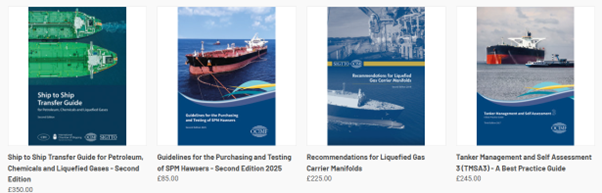
Buy OCIMF publications at Witherbys
Maritime Security Committee
The Maritime Security Committee held its last meeting of the year on 3 December, welcoming two new members from Excelerate Energy and Pertamina. A wide-ranging agenda covered the following topics:
- Progressing messaging and media opportunities to promote security guidance.
- Identifying new themes and guidance for BMP Maritime Security.
- Reviewing progress with a security campaign question in SIRE inspections.
- Receiving updates from maritime operations in the Middle East & Gulf of Guinea.
Should any member need support on maritime security issues or would like to join the committee, please get in touch with Russell Pegg, OCIMF Security Adviser,
Structures Expert Group
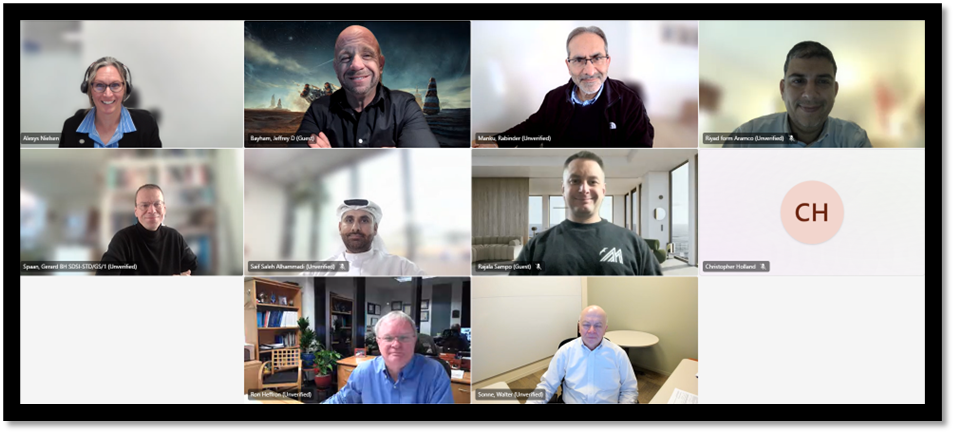
16th meeting: 3 December 2025 (virtual)
Lead: Jeff Bayham (ExxonMobil)
Co-lead: Gerard Spaan (Shell)
Secretary: Lexy Nielsen (OCIMF Engineering Adviser)
During the final Structures Expert Group (SEG) meeting for 2025, the group looked comprehensively at the upcoming publications under the SEG’s remit. Updates were shared on the progress of the revision of the Multi Buoy Mooring Guidance and the review findings of the information paper Safe Access on Ships with Exposed or Raised Deck Structures.
Updates were provided for the ongoing support of various PIANC and British Standards working groups supported by SEG members. Blue Ribbon review comments from PIANC 153c were well received by PIANC and their feedback was shared with the group.
Supporting questions from the Communities of Practice, the group collaborated on best practices for leak and pressure testing of hoses after installation in addition to correct sequencing for hydrostatic testing protocols.
For enquiries, contact Lexy Nielsen, OCIMF Engineering Adviser,
Barge Expert Group
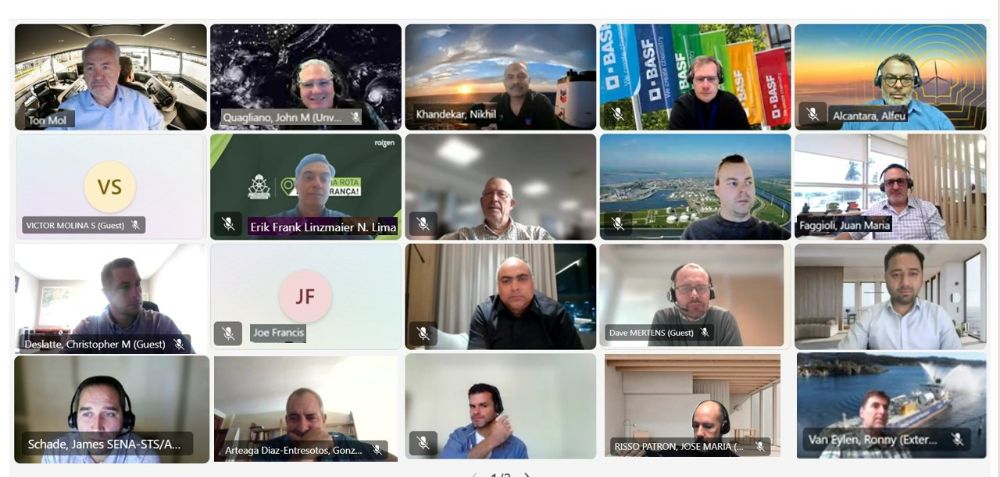
15th meeting: 4 December 2025 (virtual)
Lead: Bjorn Ternoey (TotalEnergies)
Secretary: Ton Mol (OCIMF Barge Adviser)
On 4 December the Barge Expert Group (BEG) held its 15th meeting. OCIMF was pleased to see that the number of participants is increasing and that members from all barging regions were present. Members shared regional updates and heard reports from the visit to the Asian Pacific region and the OCIMF Day in Singapore on 20 November. Furthermore, the group discussed the work on the Global Barge Guide, the global approach for barging activities and planning for 2026.
The next BEG meeting is planned for 5 February 2026, when Nikhil Khandekar (Chevron) will take over as Lead.
For enquiries, contact Ton Mol, OCIMF Barge Adviser,
IMO news
IMO Assembly, 34th session
The Assembly is the governing body of the IMO and consists of all 176 Member States. It meets every two years in regular sessions where it approves the work of the IMO, and budgetary matters. The 34th Assembly met from 24 November to 3 December 2025 and presided over the following proceedings of relevance.
Election of Council Members for years 2026-2027
The Council is the supervisory body of the IMO, made up of 40 Member States across three categories representing interests in providing international shipping services; international seaborne trade; and special interests in maritime transport and navigation representing a geographical spread, respectively. The 34th Assembly elected the 40 members for a two-year term beginning in 2026.
Adoption of Assembly resolutions
- Resolution A.1206(34) – Procedures for Port State Control, 2025: amendments include a new appendix 20 on Guidelines for port State control officers on security aspects.
- Resolution A.1207(34) – Survey Guidelines under the Harmonised System of Survey and Certification (HSSC), 2025, revoking resolution A.1186(33) from 2023.
- Resolution A.1050(27) – Revised recommendations for entering enclosed spaces aboard ships was revoked. This was replaced by a MSC resolution which was adopted in 2025, MSC.581(110) Revised recommendations for entering enclosed spaces aboard ships.
Upcoming meetings
- 12th session of the Sub-committee on Ship Design and Construction (SDC 12), 19–23 January 2026.
- 13th session of the Sub-committee on Pollution Prevention and Response (PPR 13), 9–13 February.
- 12th session of the Sub-committee on Human Element, Training and Watchkeeping (HTW 12), 23–27 February.
- 12th session of the Sub-committee on Ship Systems and Equipment (SSE 12), 9–13 March 2026.
OCIMF plans to participate in all relevant IMO Committee and Sub-Committee meetings in 2026.
For enquiries regarding IMO matters, and meeting participation, contact Risk and Regulatory Affairs Adviser, Abhijit Aul,